
Digital products and courses landing pages for Meta ads: what to show after the click
Hookpair team. Updated
Learners and creators who want a specific outcome and fear wasting time and money.
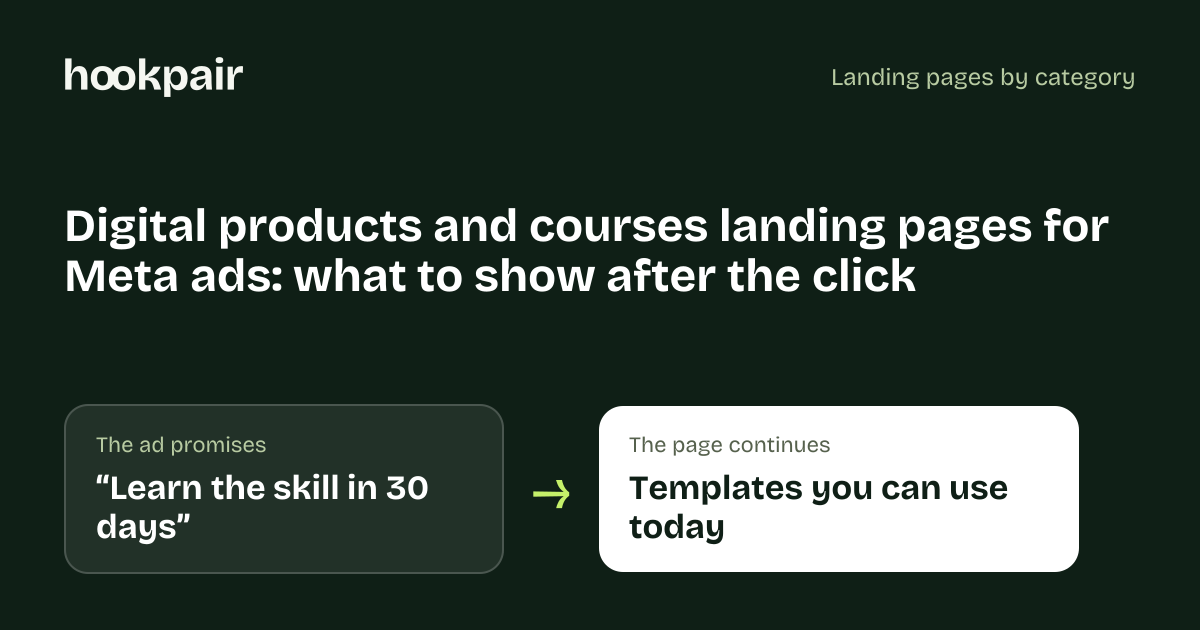
Promises that sell digital products and courses, and how the page keeps them
- “Learn the skill in 30 days”
- “Templates you can use today”
- “Lifetime access”
- Ad promise
- Learn the skill in 30 days
- Page headline
- Templates you can use today
- Proof next to it
- Curriculum or contents
- Doubt answered early
- Is it for my level?
Proof digital products and courses buyers trust
- Curriculum or contents
- Sample lesson or template preview
- Who created it
- Reviews
Doubts to answer before the button
- Is it for my level?
- What exactly do I get?
- Can I get a refund?
Previews and refund windows reduce the risk of an intangible purchase.
Rules and claims to watch
Income and results claims are closely watched by the FTC and Meta; avoid earnings promises.
The mistake that breaks the match most often
The ad promises a quick result; the page lists modules without connecting them to that result.
Check yours with a free digital products and courses audit.
Free tool: Message match check · Compare the ad's hook with the landing page headline: which words and offer numbers carry over, and which disappear after the click.
Questions
What convinces digital products and courses buyers most on a landing page?
Proof that answers their main doubt: curriculum or contents and sample lesson or template preview, placed next to the claims they support.
What is the most common landing page mistake for digital products and courses ads?
The ad promises a quick result; the page lists modules without connecting them to that result.