
Pet food landing pages for Meta ads: what to show after the click
Hookpair team. Updated
Pet owners worried about their animal's health or pickiness, who switch food cautiously.
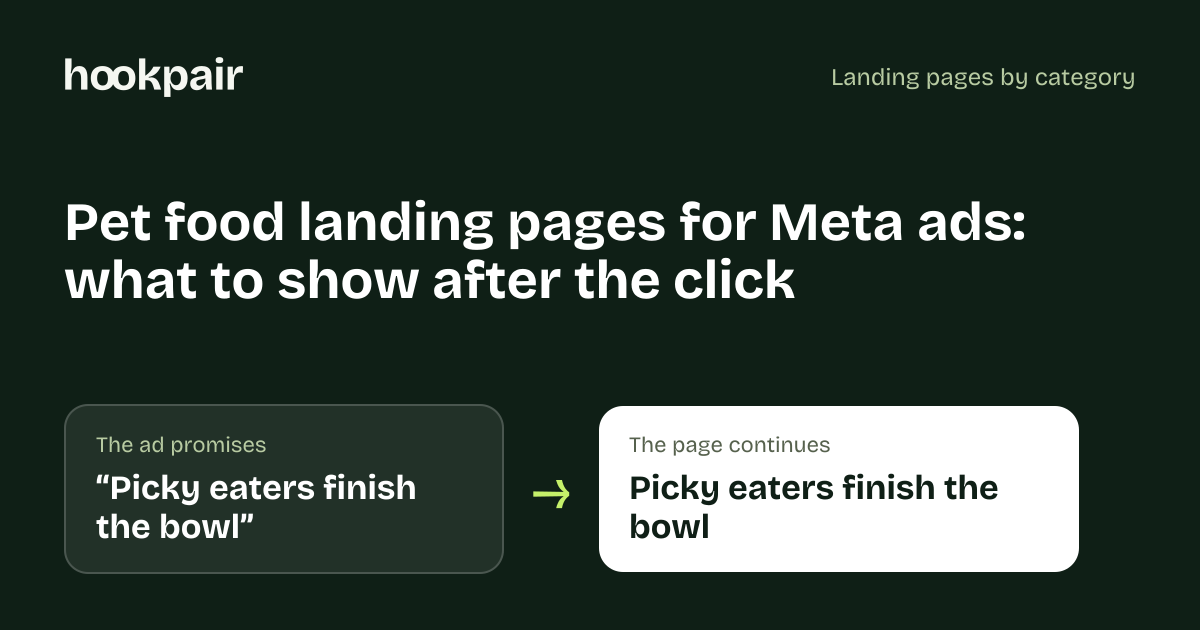
Promises that sell pet food, and how the page keeps them
- “Picky eaters finish the bowl”
- “Vet-developed recipes”
- “Fresh ingredients, gently cooked”
- Ad promise
- Picky eaters finish the bowl
- Page headline
- Picky eaters finish the bowl
- Proof next to it
- Full ingredient list and analysis
- Doubt answered early
- Will my pet eat it?
Proof pet food buyers trust
- Full ingredient list and analysis
- Transition guide
- Reviews with pet photos
- Who developed the recipe
Doubts to answer before the button
- Will my pet eat it?
- Is it safe for sensitive stomachs?
- How do I switch?
Trial packs and satisfaction guarantees address the fear that the pet won't eat it.
Rules and claims to watch
Claims about treating health conditions in pets are regulated as veterinary claims in many markets; keep to nutrition and quality.
The mistake that breaks the match most often
The ad shows a dog; the page opens on cat food or a general range.
Check yours with a free pet food audit.
Free tool: Message match check · Compare the ad's hook with the landing page headline: which words and offer numbers carry over, and which disappear after the click.
Questions
What convinces pet food buyers most on a landing page?
Proof that answers their main doubt: full ingredient list and analysis and transition guide, placed next to the claims they support.
What is the most common landing page mistake for pet food ads?
The ad shows a dog; the page opens on cat food or a general range.