
Skincare landing pages for Meta ads: what to show after the click
Hookpair team. Updated
People who have tried several products for the same skin concern and are wary of one more that doesn't work.
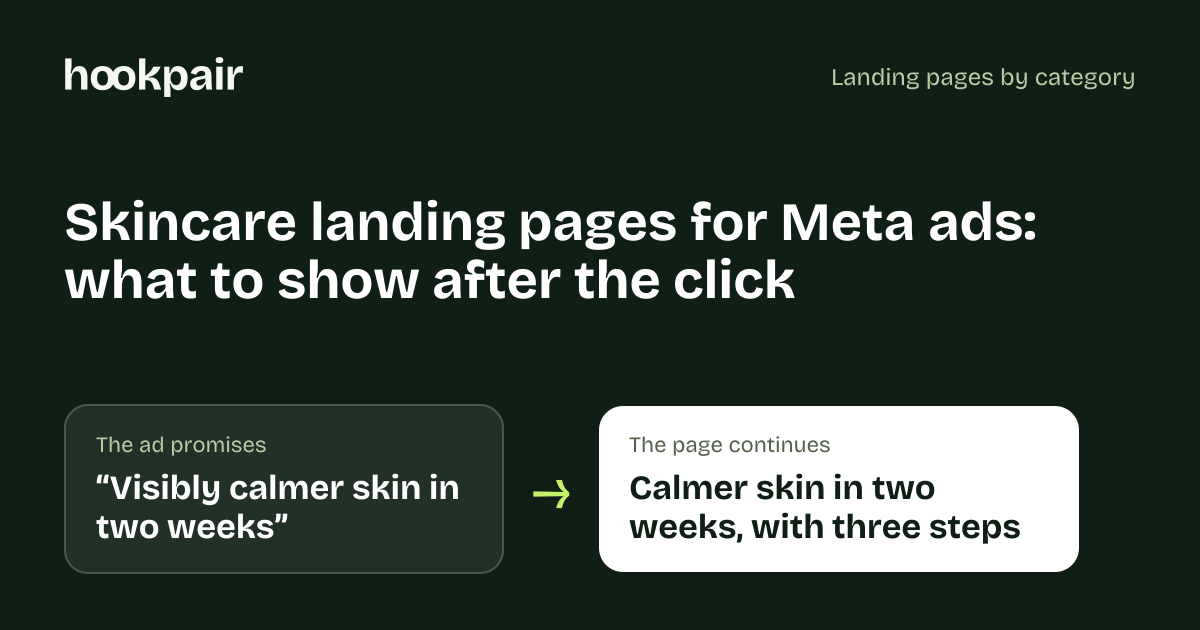
Promises that sell skincare, and how the page keeps them
- “Visibly calmer skin in two weeks”
- “A routine with three steps instead of eight”
- “Made for sensitive skin”
- Ad promise
- Visibly calmer skin in two weeks
- Page headline
- Calmer skin in two weeks, with three steps
- Proof next to it
- Ingredient list with what each active does
- Doubt answered early
- Will it irritate my skin?
Proof skincare buyers trust
- Ingredient list with what each active does
- Results from a consumer perception study, with sample size
- Reviews filtered by skin type
- Dermatologist-tested statement with who tested and how
Doubts to answer before the button
- Will it irritate my skin?
- How long until I see a difference?
- What if it doesn't suit me?
First-order discounts and starter kits work well because people want to try before committing to a full routine.
Rules and claims to watch
Claims that a product treats or cures a condition, such as acne or eczema, can turn a cosmetic into a drug in the eyes of US and EU regulators. Keep claims cosmetic and backed.
The mistake that breaks the match most often
The ad promises a result for one concern; the page opens on the whole range with no mention of that concern.
Check yours with a free skincare audit.
Free tool: Message match check · Compare the ad's hook with the landing page headline: which words and offer numbers carry over, and which disappear after the click.
Questions
What convinces skincare buyers most on a landing page?
Proof that answers their main doubt: ingredient list with what each active does and results from a consumer perception study, with sample size, placed next to the claims they support.
What is the most common landing page mistake for skincare ads?
The ad promises a result for one concern; the page opens on the whole range with no mention of that concern.