
Supplements landing pages for Meta ads: what to show after the click
Hookpair team. Updated
Health-conscious buyers who have read conflicting claims and want evidence they can trust.
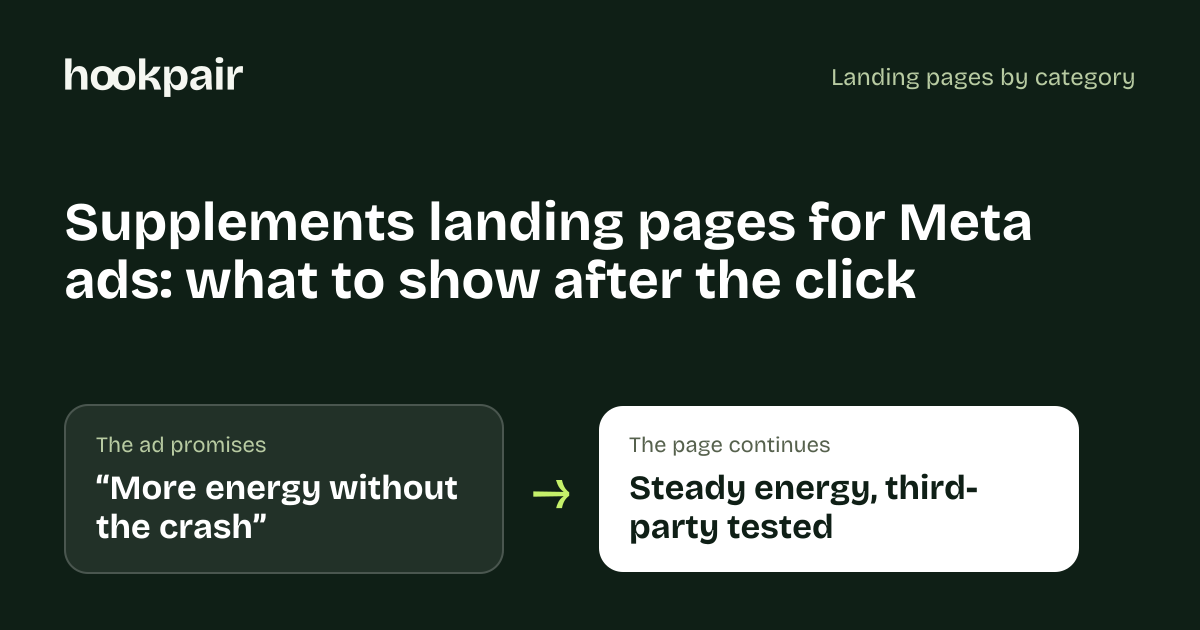
Promises that sell supplements, and how the page keeps them
- “More energy without the crash”
- “Clinically studied ingredients”
- “Third-party tested for purity”
- Ad promise
- More energy without the crash
- Page headline
- Steady energy, third-party tested
- Proof next to it
- Ingredient doses with sources
- Doubt answered early
- Is it safe with what I already take?
Proof supplements buyers trust
- Ingredient doses with sources
- Third-party test certificates
- Plain explanation of what the evidence does and doesn't show
- Reviews describing use, not cures
Doubts to answer before the button
- Is it safe with what I already take?
- Does it actually work?
- What's in it, exactly?
Subscriptions are common; make cancelling easy and the first-order price clear.
Rules and claims to watch
Health claims are tightly regulated: in the US they need substantiation and structure/function claims need the FDA disclaimer; in the EU only authorised health claims may be used. Meta also restricts before-and-after and body-image content.
The mistake that breaks the match most often
The ad leads with one benefit; the page leads with a long list of ingredients and no mention of that benefit.
Check yours with a free supplements audit.
Free tool: Message match check · Compare the ad's hook with the landing page headline: which words and offer numbers carry over, and which disappear after the click.
Questions
What convinces supplements buyers most on a landing page?
Proof that answers their main doubt: ingredient doses with sources and third-party test certificates, placed next to the claims they support.
What is the most common landing page mistake for supplements ads?
The ad leads with one benefit; the page leads with a long list of ingredients and no mention of that benefit.