
Toys landing pages for Meta ads: what to show after the click
Hookpair team. Updated
Parents and gift-givers looking for something fun, age-appropriate and worth the price.
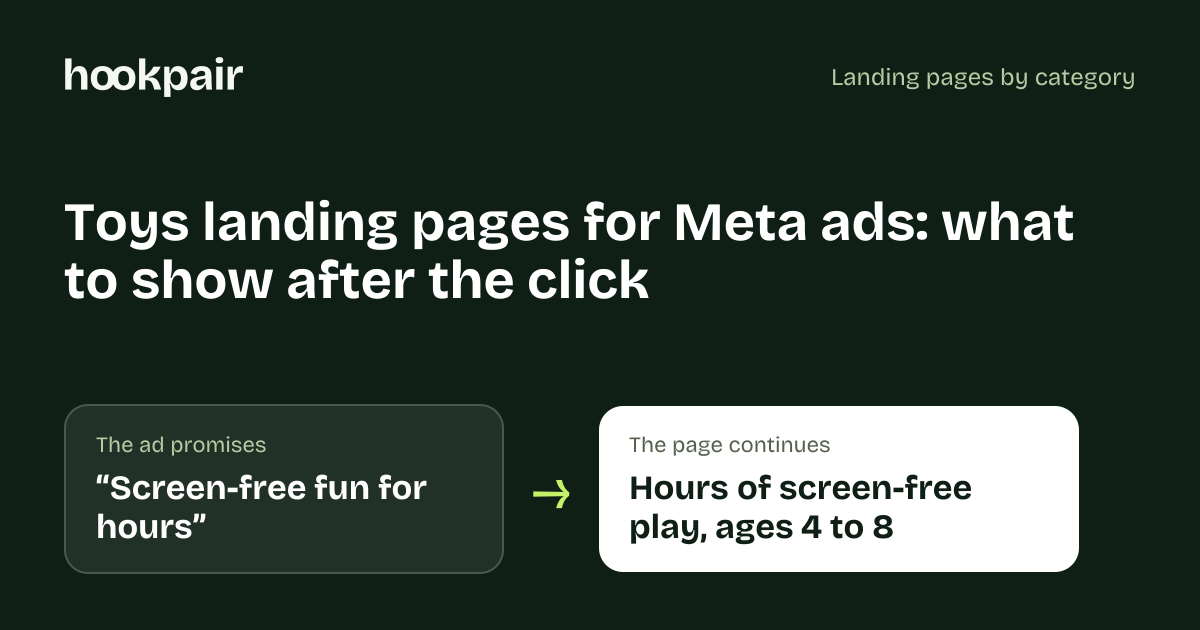
Promises that sell toys, and how the page keeps them
- “Screen-free fun for hours”
- “Learns while playing”
- “Built to last”
- Ad promise
- Screen-free fun for hours
- Page headline
- Hours of screen-free play, ages 4 to 8
- Proof next to it
- Age range and safety marks
- Doubt answered early
- Is it right for my child's age?
Proof toys buyers trust
- Age range and safety marks
- Video of children playing
- What's in the box
- Reviews from parents
Doubts to answer before the button
- Is it right for my child's age?
- Will they actually play with it?
- Is it safe?
Gift wrapping and delivery dates before holidays matter more than discounts.
Rules and claims to watch
Toy safety marking (CE in the EU, CPSIA in the US) is required; educational claims should be modest and supported.
The mistake that breaks the match most often
The ad shows the toy in use; the page shows only a packshot.
Check yours with a free toys audit.
Free tool: Message match check · Compare the ad's hook with the landing page headline: which words and offer numbers carry over, and which disappear after the click.
Questions
What convinces toys buyers most on a landing page?
Proof that answers their main doubt: age range and safety marks and video of children playing, placed next to the claims they support.
What is the most common landing page mistake for toys ads?
The ad shows the toy in use; the page shows only a packshot.